Tuesday, March 15, 2011

Welcoming to the Strive Family


    I'd like to take this time to welcome JD Vanover to the Strive Training family. JD is a 7th grader who plays Basketball and Baseball as well as participates in track. He is a tough nose athlete who, so far has been able to handle everything I have asked him to do. 

    I knew he'd would be a great fit for Strive when his mom told me during our initial discussions that he was already hitting push ups and pull ups every morning with a desire to improve his performance. Doing the little things like that, at his age, is what is going to set him apart from his competition as he prepares to enter the demanding environment of Moeller High School after his next school year.

    Right now, we are expanding on the work that he has already been doing on his own, by working to build his relative strength with a combination of bodyweight drills and sled work. We are also training movement skills so as to attain and maintain athletic qualities as well as drilling proper movement mechanics in exercises such as bodyweight squats. This will all serve to build the necessary foundation he needs to safely and effectively handle the demands the I will ask out of him in the future.

If your an athlete or a parent of an athlete who wants to start elevating their performance, becoming the dominate force on the playing field, call us today at 513-571-2950 to schedule your FREE trial session.

No Nonsense Family,

Kyle Bohannon, CSCS
Owner/Head Trainer
kyle@trainstrive.com
www.trainstrive.com
513-571-2950

Thursday, March 10, 2011

How Many Reps?


When trying to achieve high levels of strength and mass, a primary question that many ask is how many reps should be performed. You'll often see bodybuilders, or just those who think they are bodybuilders, performing reps in the 11-15 range and sometimes higher. While this helps in the development of sarcoplasmic hyperthrophy (growth of non-contracting substance,which is a topic for a whole other post) it does little to increase the size and number of contractile fibers used for lifting heavy loads. This is often why you'll see bodybuilders who are all show but no go.

To develop a high level of strength as well as build thick dense muscle, you need to stay at 10 reps and below, with a few exceptions. Muscle growth is stimulated through a combination of two things, the weight used and the amount of muscular breakdown that occurred. So if the load is high and the volume low, you won't provided an adequate amount of volume for growth. Likewise, if the load is low and the volume high, the intensity isn't large enough to encourage growth.

If you are a person who responds better to lots of volume, you might be asking, "But Kyle, how will I get the stimulus I need?" The answer is to perform more sets. Instead of sacrificing the intensity (load used) moving from 3x5 to 4x12, and more than likely performing reps with bad form, leading to injury, as exhaustion crepes up, switch to 8x3 with the weight you were going to use for the 3x5 (Your 6-7 RM or a weight that has you leaving 3-4 reps in the tank during your sets of 3). So now you are utilizing a substantial load to promote gains while also providing the volume (24 reps vs. 15) you need.

However, that isn't to say that higher reps are completely bad. If your goals at the time are to develop some aerobic metabolic properties in the muscular tissue, such as increased capillary and mitochondrial density, than higher reps are a useful tool. Also, as mentioned before, if your a bodybuilder prepping for a contest, the sarcoplasmic hypertrophy (growth of non-contracting substance) given from higher reps can be of benefit as your contest grows closer. However, I'm gonna guess no one reading this is a bodybuilder.

Finally, higher reps can be used, with bodyweight movements. High rep push ups and pullups can be an effective strength developing and conditioning circuit. However, even so, I still general like to keep the reps in circuits like these between 6-10, often times adding weight. Push ups with a couple 45's on your back will definitely get you stronger and bigger.

No Nonsense Strength and Size Development,

Kyle Bohannon, CSCS
Owner/Head Trainer
kyle@trainstrive.com
www.trainstrive.com

Thursday, March 3, 2011

Are You Recovering?


Nowadays there seems to be a trend of thought in training that you must kill yourself day in and day out in the gym. Those who believe this classify the success of a workout based on their ability to walk and talk afterwards. If they don't look like someone who has had one too many, than the workout was a waste. Those are the people that have it all wrong. Those are the people who look the same and perform the same year after year after year. They are neglecting, outside of nutrition, the most important aspect of achieve your athletic performance and fitness goals, recovery.

Without recovery you will never progress. Without recovery, you will never succeed in training. Recovery allows your body to acknowledge the stress of the workout, and thus repair itself to a point above and beyond your previous levels. When it comes to training, the more is better philosophy does not apply. 

So what rules should you be following to assure for optimal recovery? Well here they are:
  1. Your main lift (squat, deadlift, bench, military press, etc.) of the day needs to be the focus of your program. Less is more in training. If you are making progress on your main lift without extra work, then assistant exercises might do more harm than good, cutting into your recovery time. Consider getting in an effective warmup and then hitting your main lift and quickly getting out of the gym, reaping the benefits.
  2. Keep the volume of the assistance work low if it is needed to correct imbalances or bring up weak points. Again, everything in your training session should be done with an eye towards recovery and improving your main lift.
  3. Leave the gym wanting more. While you can have your 'gut check' days to challenge your mental toughness and your conditioning, on most days you should leave the gym feeling like you still have more in you. This will give you a chance to better yourself the next workout.
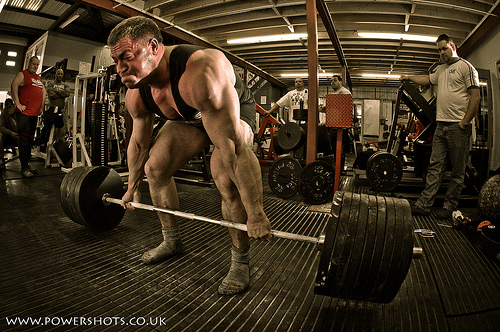
  4. Avoid going to failure. Leave 1-2 reps in the tank on all sets. Slow grinding reps only serve to further stress your central nervous system and impair recovery, and can also lead to injury. With exercises such as deadlifts, it can take 2-3 weeks to fully recover.
  5. Get 8+ hours of sleep a night. Bottom line, you need to sleep.
  6. Don't forget your soft tissue, flexibility, and mobility work. Making those elements a part of your recovery plan will help you avoid injuries and bounce back faster from injuries when they do happen. Also, take the time for psychological recovery. Meditating, reading, or whatever else allows you to calm your mind will go a long way in avoiding burn out and keeping your spirits in a fresh state.
  7. Avoid chronic elevations in cortisol. Acute cortisol increases are actually very beneficial(like it's role in the 'fight or flight' response). Chronic elevations however, can lead to depression, a loss of interest in training, weight gain, and depressed immune function amongst others issues. So how do you avoid this? Implement the first 6 steps.
No Nonsense Relaxation,

Kyle Bohannon, CSCS
Owner/Head Trainer
kyle@trainstrive.com
513-571-2950